

A week ago, the University of Wisconsin football team proved it could respond when just about everything went wrong.
On Saturday, the Badgers showed what they can look like when considerably more goes right.
Coming off its 24-20 comeback win at Penn State, Wisconsin returned to Camp Randall Stadium and handled Michigan State 31-3 on Homecoming. The Badgers scored touchdowns on their first two possessions, never trailed, and held the Spartans out of the end zone entirely.
Colton Joseph was once again at the center of everything, only this time without the roller coaster. He accounted for four touchdowns and ran for 141 yards as Wisconsin improved to 4-1 overall and 2-0 in Big Ten play.
I’m still not ready to declare every problem that followed this program into the season suddenly fixed. But Wisconsin has now stacked its best two performances of the season, and Saturday was its most complete.
Game recap
Wisconsin couldn’t have scripted its opening drive much better.
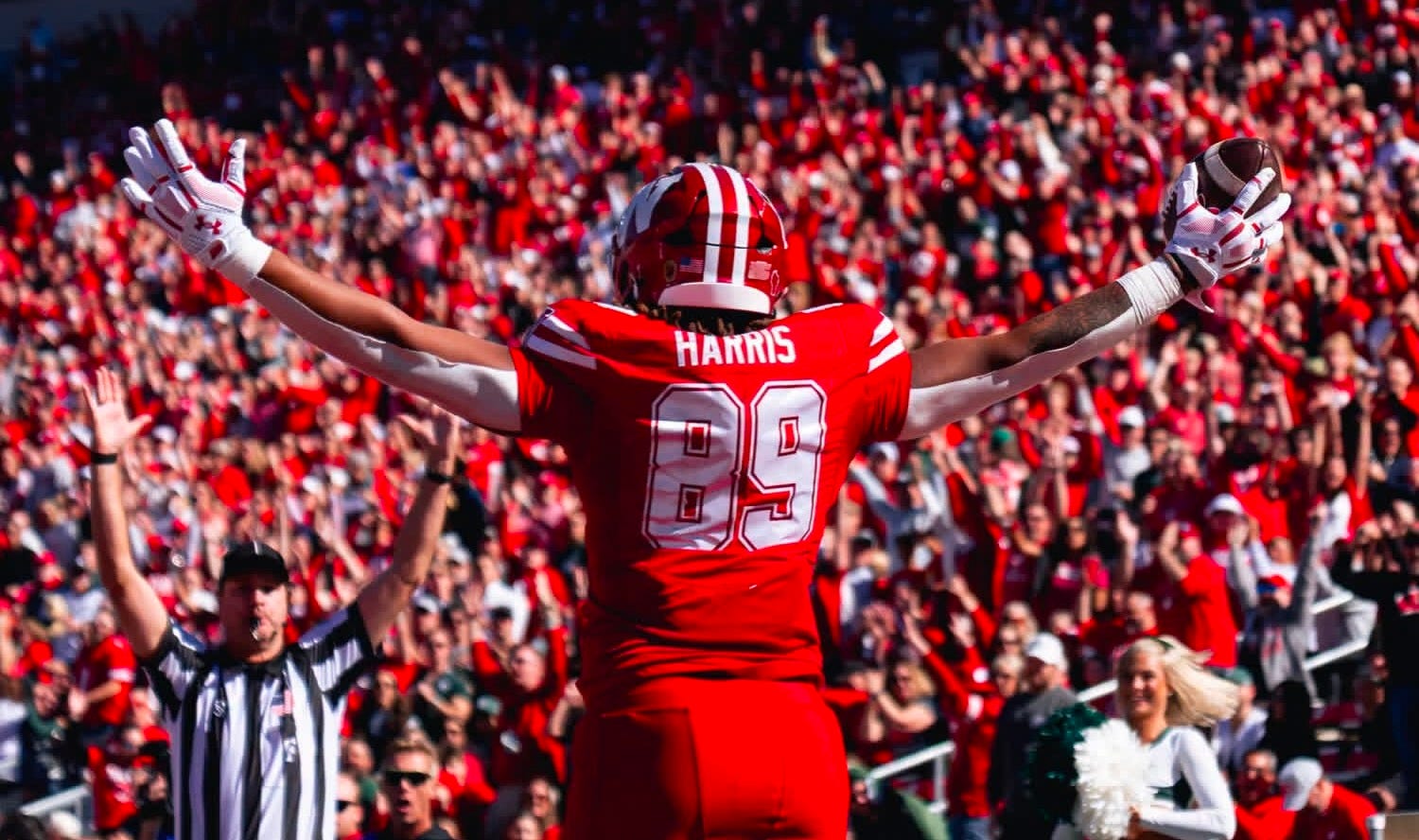
The Badgers went 75 yards in 13 plays, burned 6:44 off the clock and rushed for 53 yards. Joseph converted three first downs with his legs before finding Jacob Harris for a 20-yard touchdown on third down.
Michigan State moved into Wisconsin territory on its ensuing possession, but Javan Robinson broke up a fourth-down pass to give the Badgers possession.
Wisconsin immediately made it hurt.
Joseph and Harris connected again, this time for a 15-yard touchdown that gave the Badgers a 14-0 lead with 1:01 remaining in the first quarter.
The defense continued to keep Michigan State at arm’s length from there.

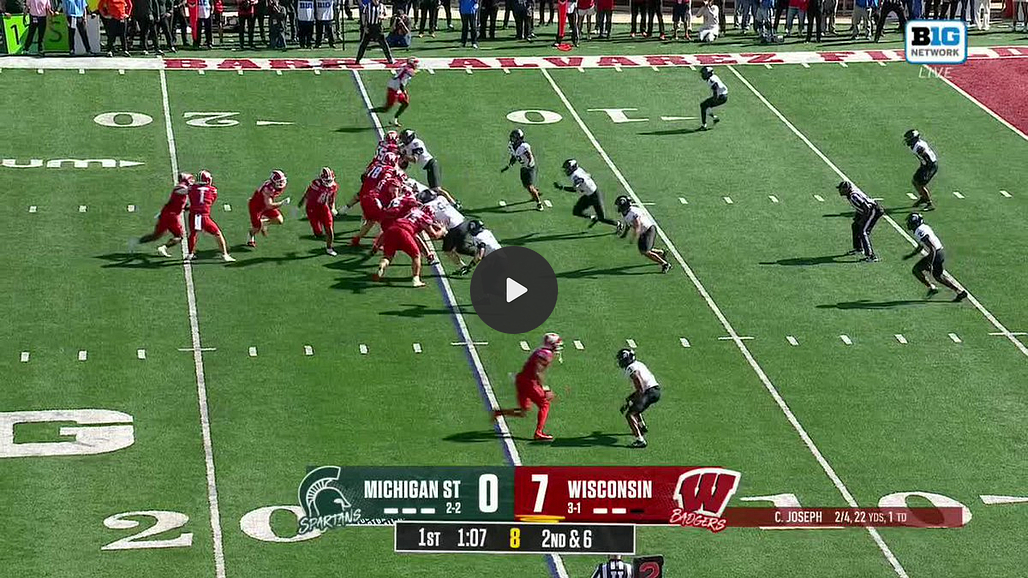
Cooper Catalano broke up another fourth-down pass on the Spartans’ next possession, and Wisconsin eventually extended its lead to 17-0 on Gavin Lahm’s 30-yard field goal.
Michigan State finally got on the board with a 31-yard field goal just before halftime, sending Wisconsin into the locker room ahead 17-3.
Then the Badgers removed whatever doubt remained.
Mason Posa helped stuff Michigan State on fourth down near midfield early in the third quarter. Four plays later, Joseph broke through the middle and took off for a 47-yard touchdown to make it 24-3.
Wisconsin’s defense never gave Michigan State a path back into the game, and Joseph eventually put the finishing touches on the afternoon with a 46-yard touchdown pass to Malachi Coleman.
What stood out
• Colton Joseph completely changed the math with his legs
This is the version of Joseph that makes Wisconsin’s offense difficult to prepare for.
Joseph wasn’t particularly efficient through the air, completing 9-of-20 passes for 145 yards. But he threw three touchdowns without an interception and completely took over the game as a runner.
He finished with 141 yards and a touchdown on 13 carries, averaging 10.8 yards per attempt. The 141 rushing yards were the most by a Wisconsin quarterback since Tanner McEvoy ran for 158 against Bowling Green in 2014.
More importantly, Joseph’s legs weren’t just producing empty yards. They repeatedly extended possessions and forced Michigan State to account for him as a legitimate part of the running game.
That was apparent from the opening possession, when Joseph ran four times for 39 yards and picked up three first downs. It became undeniable in the third quarter when he went 47 yards untouched for a touchdown.
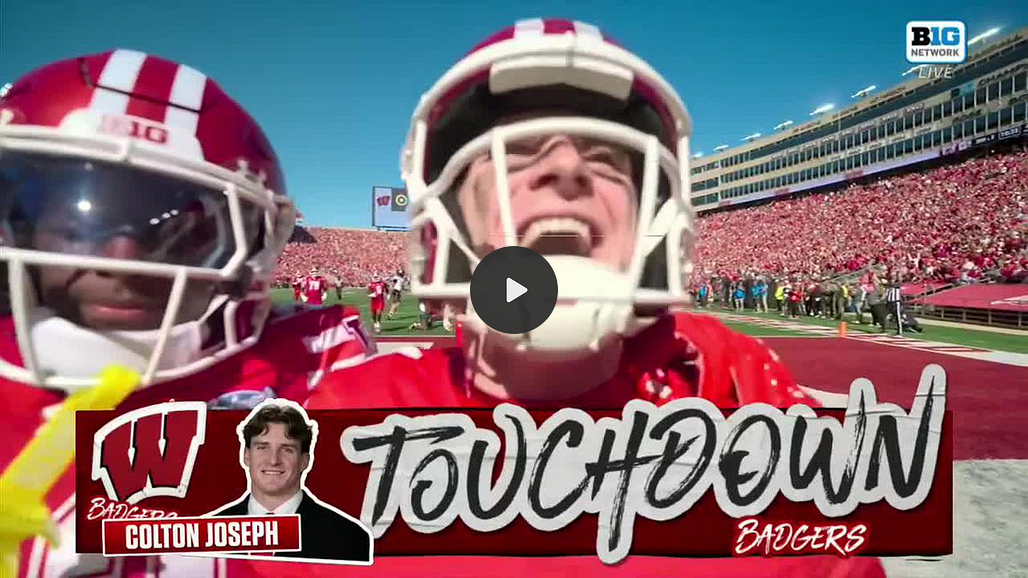
We’ve seen the downside of the Joseph experience. Penn State was about surviving it. Saturday was the other side of that equation.
When Joseph protects the football, and Wisconsin can weaponize his legs like this, the ceiling of Jeff Grimes’ offense changes considerably.
• Wisconsin’s offensive line change is worth watching
We heard rumblings during the week that Wisconsin was considering making a change up front, and that’s exactly what happened.
Kevin Heywood moved to left tackle, Colin Cubberly remained at left guard, Austin Kawecki started at center, Stylz Blackmon took over at right guard, and Emerson Mandell returned to right tackle, where he played last season. P.J. Wilkins moved to the bench.
The early returns were encouraging.
Wisconsin finished with 228 rushing yards and averaged 5.4 yards per carry. Some of that obviously belongs to Joseph, creating yards that aren’t necessarily representative of traditional offensive line play. That said, the Badgers looked more comfortable establishing the physical identity they’ve spent so much time talking about.
There is also an injury to monitor. Kawecki left during the first half with an upper-body injury and was ruled out, forcing Ryan Cory into the game at center.
Still, Wisconsin rushed for 228 yards and didn’t allow a sack.
For an offensive line that entered the season as one of my biggest questions, that’s a performance worth building on.
• Jacob Harris is becoming a real problem for defenses
At some point, this stops looking like a nice development and starts looking like something Wisconsin needs to intentionally build around.
Harris only caught two passes against Michigan State.
Both were touchdowns.
The first was an outstanding contested 20-yard catch on third down. The second came after Wisconsin used Joseph’s success on the ground against Michigan State. The Badgers sold the quarterback run, the defense reacted, and Joseph floated the ball to Harris for a 15-yard score.
That’s exactly what complementary offense should look like.
After catching five passes for 105 yards and a touchdown at Penn State, Harris has now produced 140 receiving yards and three touchdowns over the last two games.
At 6-foot-6 and roughly 265 pounds, Harris gives Wisconsin a matchup piece it hasn’t always had in the passing game. We’re starting to see what that can look like when his athleticism is paired with the stress Joseph puts on a defense as a runner.
• Mike Tressel’s defense never gave Michigan State a chance
This was a dominant performance.
Michigan State ran 79 offensive plays and gained 235 yards. That’s 3.0 yards per play.
The Spartans rushed for 127 yards on 45 attempts, averaging 2.8 yards per carry, and managed only 108 passing yards. Quarterback Alessio Milivojevic completed 15-of-32 passes for 103 yards.
Michigan State also went 5-of-18 on third down and an ugly 1-of-6 on fourth down.
Those fourth-down stops told the story.
Robinson broke up one on Michigan State’s opening possession. Catalano got another. Posa made consecutive plays on third and fourth down to end a drive near midfield in the third quarter.
Wisconsin didn’t force a turnover, but it effectively created five of them on downs.
Catalano led the Badgers with 10 tackles and a pass breakup. Posa added nine tackles, eight solo, with a quarterback hurry. Charles Perkins and Thomas Heiberger recorded Wisconsin’s two sacks.
After holding Penn State to 248 yards and 20 points last week, Wisconsin followed it by allowing 235 yards and three points.
That’s starting to look like something this team can hang its hat on.
Game Balls
QB Colton Joseph: Joseph completed only nine passes, but this game belonged to him. The 6-foot-2 signal caller rushed for 141 yards and a touchdown while throwing for 145 yards and three more scores without turning the football over. That’s 286 total yards and four touchdowns.
LB Cooper Catalano: Catalano finished with a team-high 10 tackles, six solo, and broke up a pass. His fourth-down breakup was one of five stops Wisconsin produced on fourth down. He’s taken a big step forward.
Stats of the game
141: Joseph’s rushing total, the most by a Wisconsin quarterback since Tanner McEvoy rushed for 158 yards against Bowling Green in 2014.
1-of-6: Michigan State’s performance on fourth down. Wisconsin’s defense repeatedly slammed the door when the Spartans tried to extend drives.
3.0: Michigan State averaged just 3.0 yards per play despite running 79 offensive plays.
228: Wisconsin’s rushing total. The Badgers averaged 5.4 yards per carry and did not allow a sack.
0: Wisconsin didn’t turn the football over after giving it away three times in last week’s win at Penn State.
What’s next
Luke Fickell and the Wisconsin Badgers head into their bye week at 4-1 overall and 2-0 in Big Ten play before traveling to UCLA on Oct. 17.
I wanted to keep this team at arm’s length after Penn State because one signature win didn’t erase everything that came before it. I still think that’s fair. But this is how you start changing the conversation.
Wisconsin followed the biggest win of the Fickell era by coming home and comfortably handling a team it was supposed to beat. There was no hangover. No need for another comeback. No fourth-quarter drama.
Just a 28-point Big Ten win and another piece of evidence that maybe this team is starting to figure some things out.
We appreciate you taking the time to read our work at BadgerNotes.com. Your support means the world to us and has helped us become a leading independent source for Wisconsin Badgers coverage.
You can also follow Site Publisher Dillon Graff at @DillonGraff on X.