

Wisconsin football had a chance to build on its early-season momentum after the bye week. Instead, the Badgers went to UCLA and delivered another frustrating reminder of how far this program still has to go.
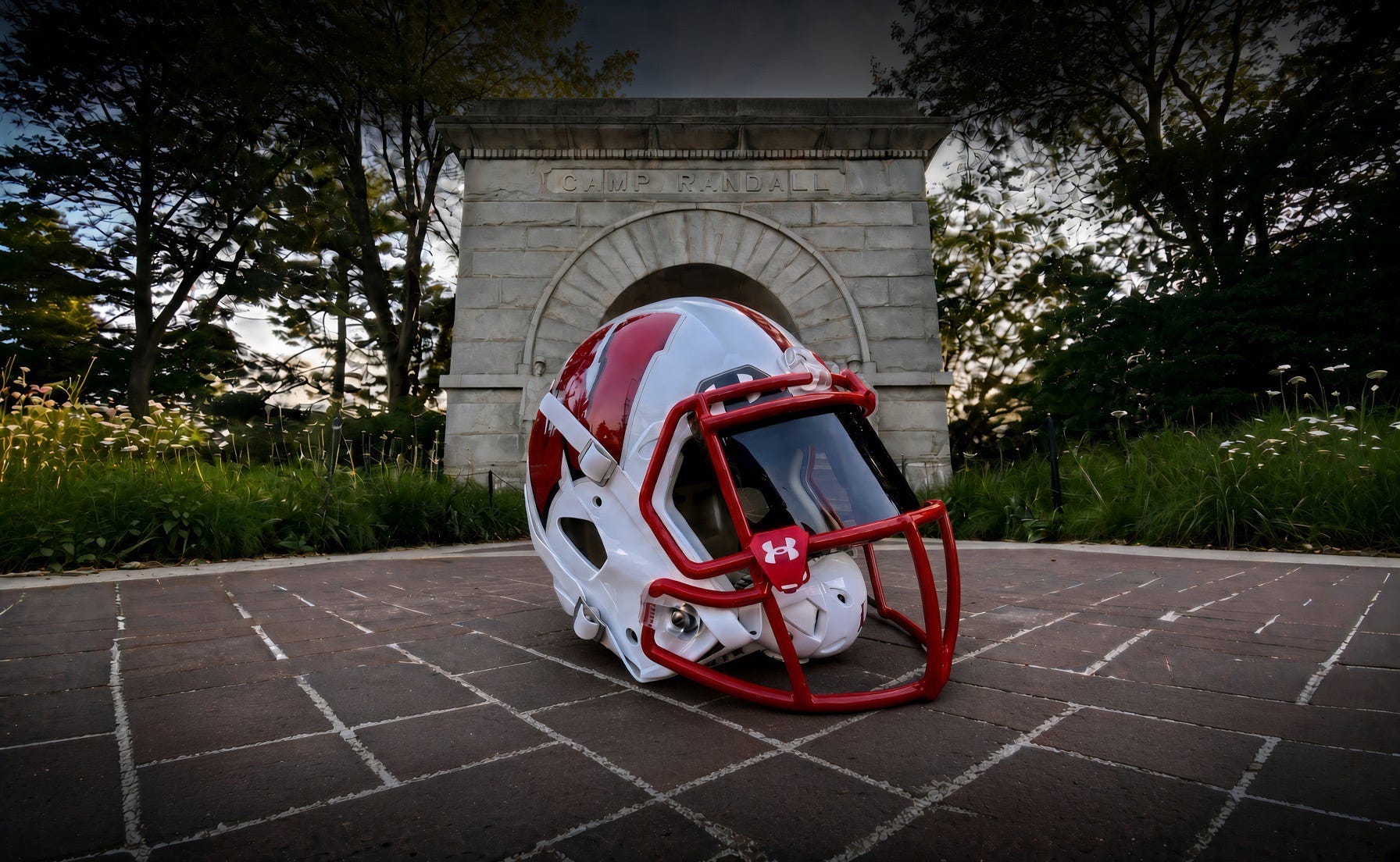
Now sitting at 4-2, Luke Fickell’s team returns to Camp Randall Stadium to face No. 16 USC, with some familiar questions that haven’t gone away.
The defense has been good enough to give Wisconsin a chance most weeks. Everything surrounding it has been considerably less reliable. And with the toughest part of the schedule still ahead, there are three things I’m particularly interested in seeing whether this team can figure out.
Can Wisconsin finally settle on an offensive line combination?
Colin Cubberly is the only Wisconsin offensive lineman who’s started at the same position all season, holding down left guard. You could technically include Austin Kawecki at center, although he’s currently dealing with a hand injury. On the bright side, he’s probable for USC.
Beyond that, it’s been a revolving door.
Kevin Heywood opened the year at right tackle before moving to left tackle. Emerson Mandell worked his way back from injury at right guard before kicking outside to right tackle. Stylz Blackmon started the season rotating at right guard, eventually earned the starting job, and has since moved to center. Then there’s PJ Wilkins, who opened the season at left tackle, moved to right tackle, and most recently played right guard.
That’s an awful lot of moving pieces for a position group where continuity and communication are everything.
I understand the staff is trying to find its best five, but constantly shuffling guys around has a cost. You’re asking players to adjust their footwork, assignments, and the guy next to them on a weekly basis.
And the results haven’t exactly justified all that experimentation.
Wisconsin had allowed just three sacks through its first five games, one of the better marks in the Big Ten entering the UCLA matchup. Then the Badgers surrendered three more in Pasadena, doubling their season total in one evening. The offense struggled to establish much consistency, and the constant movement up front certainly hasn’t helped.
Getting Kawecki healthy would certainly help. If he isn’t available, does Ryan Cory give Wisconsin a more natural option at center? Or does the coaching staff continue believing Wilkins is one of its best five and hope that allowing him to settle into a position produces better results?
I’m not convinced there’s an obvious solution. But it’s hard to build real cohesion up front when the combinations never stay the same long enough to develop.
Can Wisconsin establish an offensive identity it can sustain?
I can see what Jeff Grimes is trying to accomplish offensively. I’m just not convinced Wisconsin has the personnel or execution to make it work.
And the underlying numbers help explain why.
According to GameOnPaper’s 2026 offensive profile, Wisconsin grades near the top nationally in explosive rushing percentage, while its overall rushing efficiency is considerably closer to average.
The Badgers also perform relatively well in line yards, suggesting the offensive line has created some opportunities in the running game despite its instability.
But here’s the problem.
Wisconsin sits near the bottom quarter nationally in early-down EPA per play, and its passing efficiency is well below average. Its explosive passing percentage also lags significantly behind what it’s producing on the ground.
That’s not exactly a sustainable formula.
Colton Joseph is a legitimate threat with his legs, and his ability to create explosive runs changes how defenses have to approach Wisconsin. But the Badgers need considerably more down-to-down consistency to complement those occasional big plays.
That’s especially concerning when your quarterback has completed fewer than 50% of his passes in three consecutive games. Joseph is now 87-of-159 (54.7%) for 1,198 yards, 10 touchdowns, and five interceptions this season. There have been moments, but overall, that body of work shows Wisconsin isn’t getting nearly enough consistency from the passing game.
Joseph has shown some playmaking ability, but accuracy, decision-making, and operating in obvious passing situations remain significant concerns. Wisconsin cannot continually put itself behind the chains and expect Joseph to bail it out through the air.
The offense needs to find a way to stay ahead of schedule, establish manageable third downs and create passing opportunities that don’t require Joseph to consistently make difficult throws. Otherwise, I’m not sure how much better this group can realistically become.
How much longer can Wisconsin expect its defense to carry the offense?
This might be the biggest question surrounding the entire team.
Mike Tressel’s defense has been legitimately good, and both the traditional and advanced numbers back that up. Wisconsin is giving up just 16.7 points per game and 286.7 total yards per game.
Opponents are averaging 171.2 passing yards and 115.5 rushing yards. GameOnPaper’s defensive profile also has Wisconsin performing at a high level in overall EPA per play (14th nationally), early-down efficiency, passing EPA, and limiting explosive plays.
That’s a pretty encouraging foundation.
Mason Posa and Cooper Catalano have developed into two of the most important players on the roster, and Wisconsin has generally looked like a defense capable of competing against quality Big Ten opponents.
But there’s a difference between having a defense that gives you an opportunity to win and expecting that defense to do almost everything.
Against UCLA, Wisconsin’s inability to sustain drives or consistently move the football placed enormous pressure on the other side of the ball. And when the Badgers couldn’t get off the field on third down, things unraveled.
USC presents another opportunity to find out how dependable this defense really is, particularly against an opponent capable of testing Wisconsin through the air.
But I don’t think it’s reasonable to expect Tressel’s group to hold opponents to single digits every week. At some point, the offense has to contribute enough to make those defensive performances matter.
That’s what makes this stretch so important.
Wisconsin has already shown that its defense can keep the team competitive in most games. What we haven’t seen is enough evidence that the offense can consistently hold up its end of the bargain.
Until that changes, I have a hard time seeing this team become much more than one that needs nearly everything to go right to beat a quality opponent.
We appreciate you taking the time to read our work at BadgerNotes.com. Your support means the world to us and has helped us become a leading independent source for Wisconsin Badgers coverage.
You can also follow Site Publisher Dillon Graff at @DillonGraff on X.