

The NFL Draft has long served as one of the clearest measuring sticks for the health of college football programs.
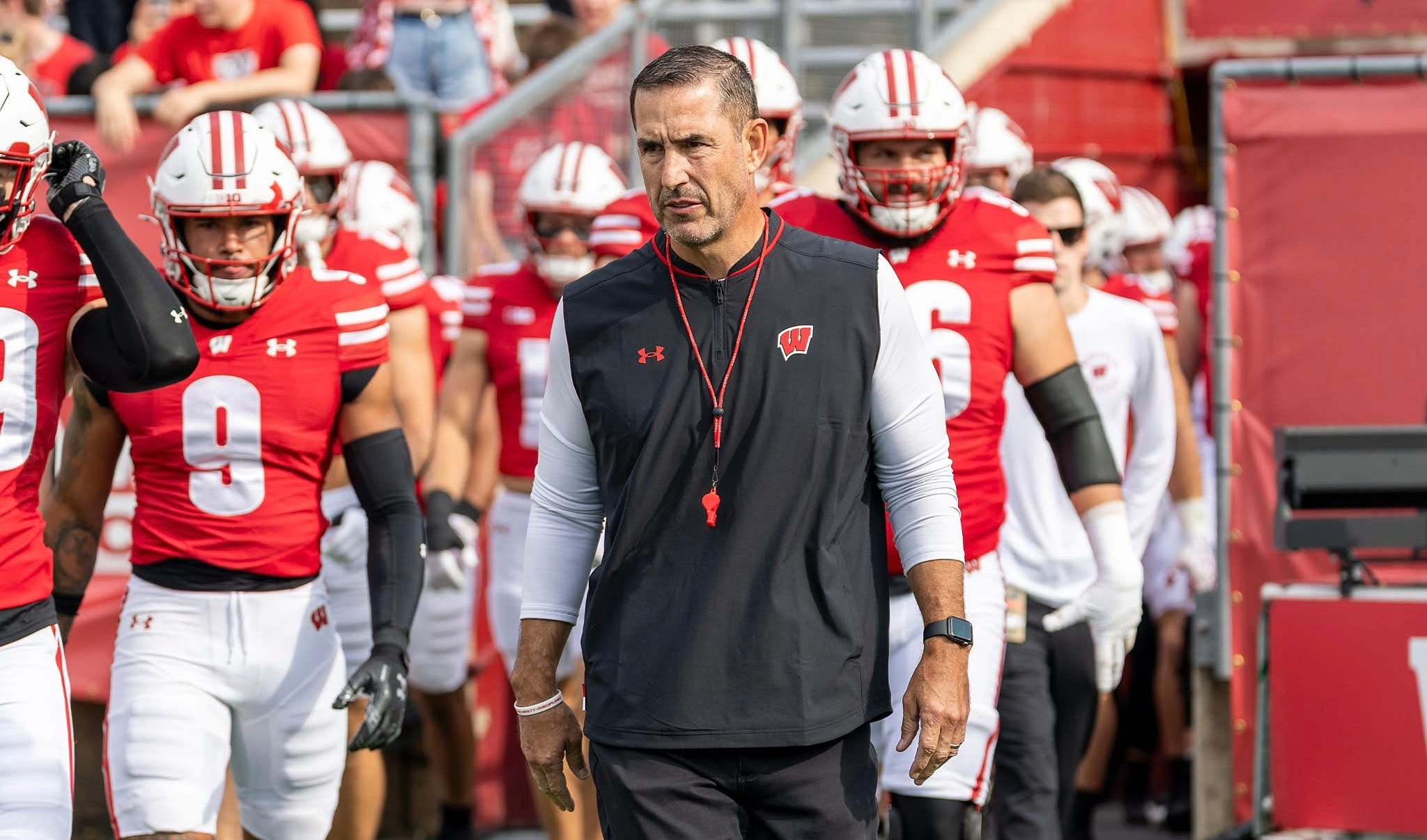
And this year, that measuring stick delivered what Luke Fickell described as an “eye-opening realization” for the Wisconsin football program.
For the first time since 1978, the University of Wisconsin failed to produce a single NFL Draft pick. This result stood out even more when compared against the rest of the Power Four landscape, where teams across the country sent players to the next level at its highest rate in the modern era.
In total, 15 FBS programs produced seven or more draft picks in 2026, while 231 of the draft’s 257 selections came from Power Four conferences. That’s the gap Wisconsin is trying to close — not only climbing out of the bottom tier of the Big Ten and restoring respectability to the program, but eventually pushing it toward the level university leadership envisioned when it hired Fickell away from Cincinnati after leading the Bearcats to the College Football Playoff in 2021.
“It’s disappointing, but it’s also a realization,” Fickell said of Wisconsin not having a player selected in the 2026 NFL Draft. “It is what it is, but I think there is some realization that I’m gonna make sure these guys in this program understand and know. … That’s the realization of where we are, and that’s not the expectation. That’s not what we want. That’s not what we desire to have, well then we need to change it. So there are a lot of things we can do to make sure that’s not the case, but it’s also an eye-opening realization to say that’s where we are, and we’ve got to change.”
The reality is, Wisconsin still had players land opportunities after the draft concluded.
A handful of former Badgers signed undrafted free agent deals or earned rookie minicamp invites after the draft, giving them opportunities to continue pursuing professional careers. But Fickell’s point wasn’t necessarily about whether Wisconsin had NFL-caliber players somewhere on the roster. It was about the standard that they failed to uphold.
For years, Wisconsin built much of its identity around player development and NFL production, particularly along the offensive line, at linebacker, tight end, and running back. Seeing the draft come and go without hearing a single Badgers player selected served as another reminder that the program still has significant ground to make up after back-to-back disappointing seasons under Fickell, where they failed to make a bowl.
Entering Year 4 under Fickell, Wisconsin owns a 17-21 overall record and a 10-17 mark in Big Ten play during his tenure, along with just one bowl appearance — numbers that fall well short of the expectations that accompanied his arrival from Cincinnati. And internally, there’s an understanding that simply acknowledging the issue isn’t enough anymore.
Wisconsin has invested heavily, both financially and structurally, to change the program’s trajectory. The Badgers moved aggressively in the transfer portal, retooled parts of the coaching staff, increased spending around recruiting and personnel, and continued pouring resources into areas designed to modernize the operation and accelerate the rebuild.
What also makes the conversation more complicated is the reality of modern roster building. Early in Fickell’s tenure, there was a fair argument that Wisconsin needed time for recruiting classes to fully develop before the NFL Draft became a meaningful measuring stick. But in today’s transfer portal era, where programs can reshape rosters each year through glorified free agency, that timeline has accelerated considerably.
Wisconsin may not operate with the same NIL budget as programs like Ohio State, Oregon, Indiana, or Michigan. Still, the Badgers also haven’t been working from the bottom of the financial landscape either. At some point, the lack of draftable talent becomes tied not only to resources but also to talent evaluation, roster construction, and player development.
Compounding that reality even further, the two Wisconsin players selected in the 2024 NFL Draft — Tanor Bortolini and Braelon Allen — along with the two players drafted in 2025 — Jack Nelson and Hunter Wohler — were all originally recruited under former head coach Paul Chryst. That context matters when evaluating where Wisconsin currently stands from a roster-development standpoint under coach Fickell.
All of that helps explain how Wisconsin arrived at this point. But it doesn’t ultimately change how the sport measures progress — or how Power Four programs like Wisconsin are judged nationally. The results still matter.
NFL Draft picks remain one of the clearest reflections of roster quality, development, and the overall health of a college football program. And right now, Wisconsin understands it isn’t where it expects to be.
That’s what made Fickell’s comments notable.
There was no attempt to spin the situation or pretend the standard had somehow changed. Instead, the message coming out of Madison was fairly direct. Wisconsin’s coaching staff understands where it currently stands, and the expectation inside the building is that it can’t afford to stay there for long, especially now that former athletic director Chris McIntosh — the man who hired Fickell — is no longer in the picture after taking a job as Deputy Commissioner for Strategy within the Big Ten.
We appreciate you taking the time to read our work at BadgerNotes.com. Your support means the world to us and has helped us become a leading independent source for Wisconsin Badgers coverage.
You can also follow Site Publisher Dillon Graff at @DillonGraff on X.
"Eye opening"? This is very concerning. 3+ years in, and he's just thinking there are problems now?
I really want this to work out well, and see both Fickell and the program rebound, but it seems there is very little, if any, introspection/ self evaluation happening.