

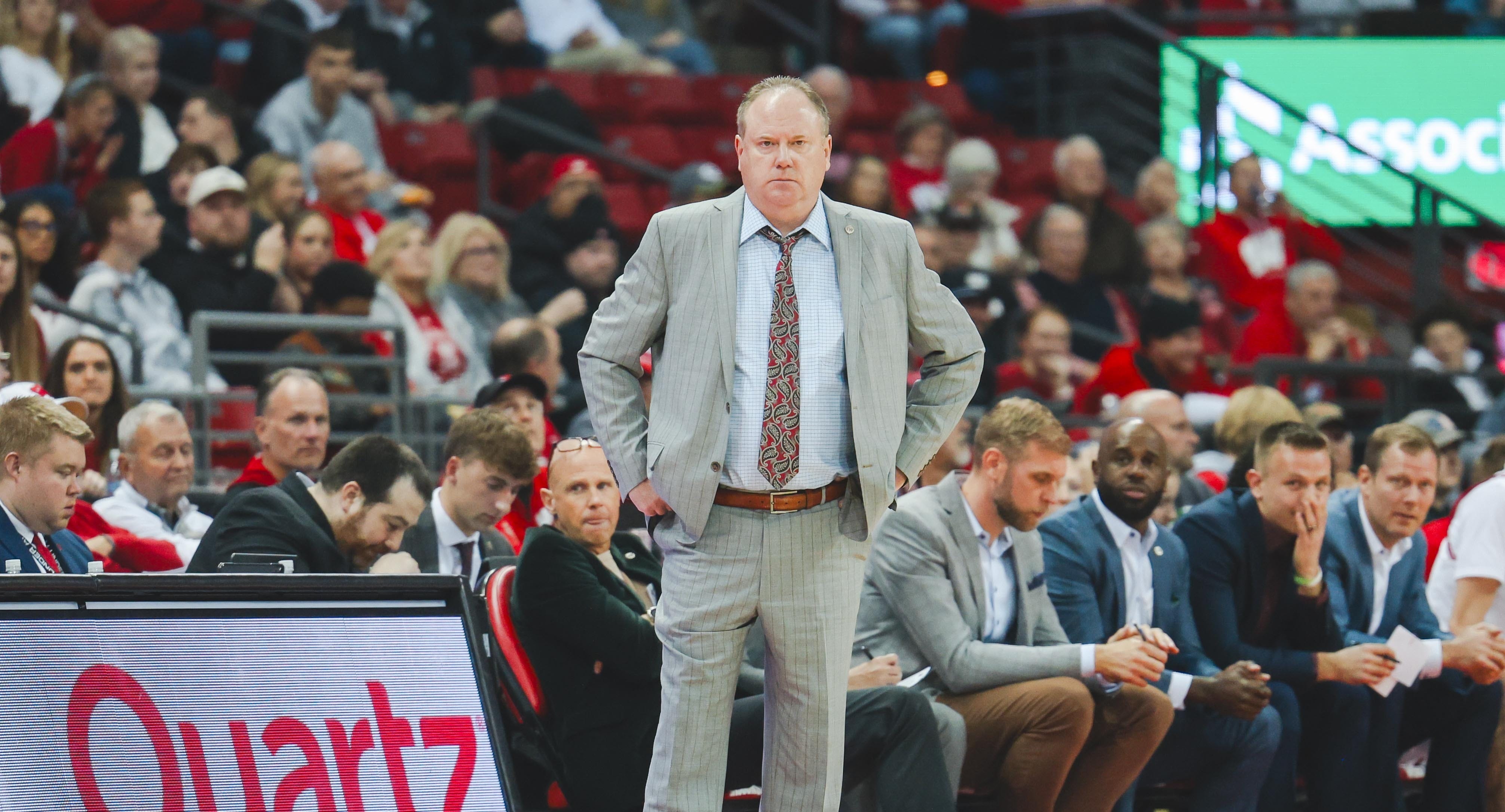
There’s a business side to roster building in college athletics now, and for the University of Wisconsin men’s basketball program, much of what shapes a team happens behind the scenes long before the games begin.
Retaining players. Managing revenue share. Structuring NIL deals. Navigating agents. Evaluating transfer portal fits. Allocating resources. Determining which players are worth building around and which additions actually complement the roster enough to help impact the bottom line.
That’s all part of the job now.
And as Wisconsin’s staff retooled its roster for the upcoming 2026-27 season, Greg Gard made it clear there has been far more involved in the Badgers process than simply evaluating film and recruiting talent.
The modern portal landscape has often felt like “amateur hour” behind the scenes, with inconsistent rules, varying levels of agent experience, and constant conversations centered around contract structure, revenue sharing, third-party NIL, and payment schedules. Gard acknowledged there are still very few true guardrails in place nationally, which has forced programs like Wisconsin to spend just as much time navigating the business and educational side of roster building as the basketball side.
“There are agents who are really good, who understand this space, are fair and very professional in how they operate,” Gard said on Butchie’s Den. “And then there’s the other side — what I refer to as amateur hour.
“People have jumped into this, and there are no guardrails. We really have no rules in place, and anyone can be involved, so you get a wide variety of experiences. Some just don’t understand how the college NIL landscape works and needs to work in terms of how you can legally pay an athlete.”
That reality is part of why Wisconsin expanded its staff last offseason to more closely resemble a professional front-office model, leaning heavily on general manager Marc VandeWettering throughout the process.
“That’s where Mark has really stepped in, and honestly, it’s been built on the fly,” Gard said while praising VandeWettering’s ability to navigate and communicate through the constantly changing realities of the modern college basketball landscape. “You hate to build an airplane as it’s running down the runway, but that’s kind of what we’ve been doing. He’s done a phenomenal job. I don’t get around the other sports much, but if he’s not the best GM and understanding of it on our campus, I don’t know who is.
“He’s really, really sharp in terms of understanding this new world.”
Wisconsin entered the offseason understanding the challenge ahead.
Yes, the Badgers increased their overall NIL resources from a season ago. But so did much of the conference around them. And while Wisconsin believes it can compete financially, the reality is the program still operates with a budget that sits somewhere in the bottom third of the Big Ten.
That reality has forced Wisconsin to become extremely disciplined in how it approaches roster construction.
