

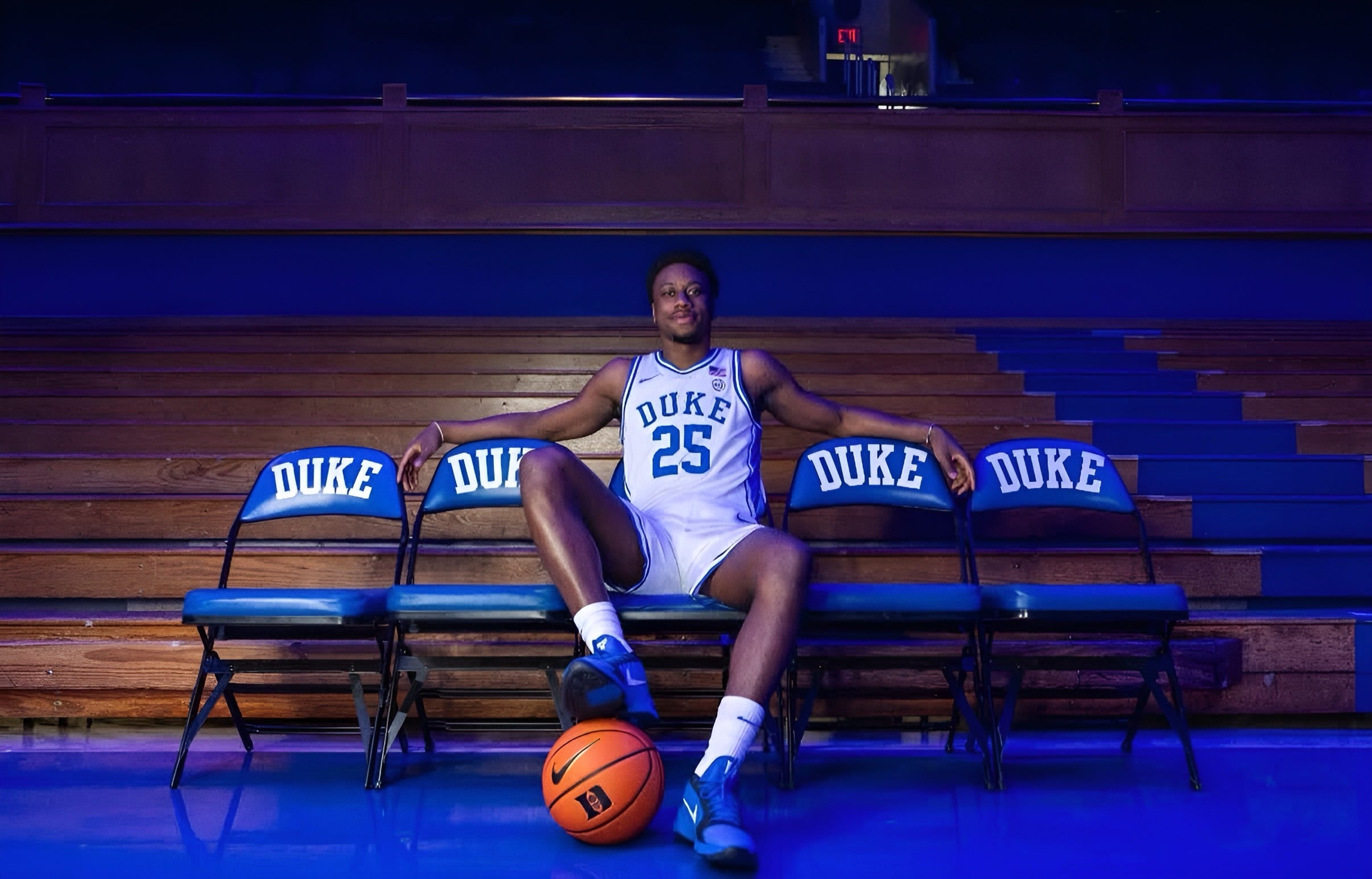
For the Wisconsin men’s basketball program, John Blackwell’s departure represents more than just losing one of the Big Ten’s most productive guards.
It’s also another reminder of how dramatically the landscape around college athletics and player development has changed.
Blackwell announced that he would enter both the 2026 NBA Draft and the transfer portal before ultimately landing at Duke, ending a three-year run in Madison that saw him develop from an under-recruited prospect into one of the most accomplished guards in recent program history.


And from Greg Gard’s perspective, that development still matters — even if the ending looks different than it once did.
“When you’re in this position, you’re always trying to help people,” Gard said during an appearance on ESPN Milwaukee. “Elevate their lives, right? And become better than when they arrived. John arrived with only one high major offer. Everything else was in the MAC and at lower levels.
“And he’s able to be in a position where he has a chance to go better himself, better his future, better his livelihood from a financial standpoint. Whether he was, or someone gets drafted in the first round of the NBA draft, or they land a job with a Fortune 500 company, and they’re able to financially be in a very good place. They’re better than when they arrived.
“Although it’s different than how it was back then, that better than when you arrived has taken a different twist and a different turn. I don’t fault John at all, just like I didn’t fault Chucky Hepburn for putting themselves in a position where they had options to be able to better themselves. I sleep just fine.”
That quote says as much about the current state of college basketball as it does Blackwell himself. Gard understands that the financial side now carries significant weight in these decisions. And while that reality may not be ideal for coaches, he’s also shown a willingness to accept it and support players who are chasing what they believe is best for their future.
Because when Blackwell arrived on campus, Wisconsin was his lone high-major opportunity. He chose the Badgers over offers from Central Michigan, Eastern Michigan, Northern Illinois, Toledo, Cleveland State, and several other mid-major programs. Three years later, the Michigan native leaves as one of the most productive guards in program history, having developed under Gard and his coaching staff into an All-Big Ten-caliber player.
This past season marked the most complete version of his game.
Across 34 games, Blackwell averaged 19.1 points, 5.1 rebounds, and 2.3 assists per game while shooting 38.9% from beyond the arc en route to third-team All-Big Ten honors. He finished ninth in the Big Ten in scoring, produced five 30-point games, and became one of only 10 Wisconsin players since 1990 to average at least 18 points per game in a season.
That list puts him in rather elite company alongside names like Michael Finley, Devin Harris, Alando Tucker, Frank Kaminsky, Johnny Davis, John Tonje, Jon Leuer, Jordan Taylor, and Nick Boyd — essentially a collection of some of the program’s best offensive players of the modern era.
Blackwell’s consistency over time also mattered.
Across 107 career appearances and 74 starts for the Badgers, Blackwell scored 1,505 career points, climbing all the way to 11th on Wisconsin’s all-time scoring list despite spending just three seasons in the program.
And yet, that production no longer guarantees a traditional ending.
Instead, Blackwell will now go through the NBA Draft process, gather feedback from scouts and decision-makers, and then head to Duke for his senior season — a move that reflects both the realities of modern college basketball and the ambitions of a player looking to compete at the highest level possible. For Blackwell, the next step is to push his game as far as it can go, play against elite competition, take on more responsibility with the ball in his hands, and give himself the best chance at the NBA.
For Wisconsin, though, the equation looks different.
In the NIL era, roster construction often comes down to difficult business decisions and finite financial resources. Programs have to constantly evaluate where to invest, how to balance retention with portal additions, and what combination of players gives them the best chance to compete in the Big Ten.
Simply put, replacing Blackwell won’t be easy.
Players with that level of production and shot-making ability are difficult to replicate, especially when they developed within the program and became part of the foundation for one of the most efficient offensive teams Wisconsin has produced. Instead, the Badgers will have to try to replace Blackwell in the aggregate, leaning on a combination of returning players, portal additions, and internal development to help fill the void.
From Gard’s perspective, though, the mission remains largely the same.
Develop players while you have them. Help them grow as people. Put them in a position to have options, even if those options now sometimes lead somewhere else. That may not always make roster retention easy in today’s college basketball landscape. But, in Blackwell’s case, it’s also hard to argue Wisconsin didn’t accomplish exactly what it set out to do.
We appreciate you taking the time to read our work at BadgerNotes.com. Your support means the world to us and has helped us become a leading independent source for Wisconsin Badgers coverage.
You can also follow Site Publisher Dillon Graff at @DillonGraff on X.